

Here’s the thing about letting people in — it sounds simple until you actually have to do it.
Like, in theory, sure… you’ll open up “when you’re ready.” But in reality? You’ve spent years building this whole image of being the one who’s fine. The one who can juggle twelve things at once. The one who can handle whatever gets thrown at her without flinching.
And then something happens — a rough day, a heartbreak, one of those slow-burn stress weeks — and you kind of want to tell someone. But the second you think about it, your brain goes, “Uhh… how exactly are we doing this without making it weird?”
Why it’s so freaking hard
I think for a lot of us, it’s not that we don’t trust people. It’s that we’ve trained ourselves to be the strong one for so long, it’s basically muscle memory. We’ve learned to:
- Keep it light so no one worries.
- Edit out the messy details.
- Make it sound like we’ve got it under control, even when we don’t.
And part of that comes from experience. Maybe you have tried opening up before and got hit with awkward silence, unhelpful advice, or someone changing the subject. After that, you learn real quick who gets the surface version and who gets the real one.
Loud strength, quiet strength… both can hide things
Strength wears different outfits. Sometimes it’s loud — you’re outgoing, decisive, keeping everyone else calm. Sometimes it’s quiet — you’re reliable, steady, holding things together in the background.
Both can be real. Both can be camouflage.
And when you’re used to carrying yourself that way, you forget you even can set something down. You start thinking you don’t have the luxury of slowing down, breaking down, or letting people see the cracks.
The awkward middle ground
Letting someone in doesn’t have to be a full, tear-streaked confessional. You don’t need to start with your deepest wound. It can be smaller than that. Like:
- Saying, “Today was rough” instead of “I’m fine.”
- Allowing a pause before you answer, instead of rushing to sound okay.
- Admitting, “I haven’t figured it out yet,” and letting the silence stand.
- Letting them see you cry instead of turning away.
It will feel clumsy. You’ll overthink it. You might wish you could stuff the words back in your mouth mid-sentence. But that’s just part of it. The awkwardness is the toll you pay to get to the other side.
Picking your people
Not everyone needs an all-access pass. Honestly, most shouldn’t get one.
The right people to let in are the ones who:
- Don’t rush to “fix” you.
- Keep what you share private.
- Make space for both your strength and your softness.
You don’t need to build a huge support network. You just need to know exactly who you’d call when you’re finally ready to say, “Hey, I’m not okay.”
Baby steps count
You don’t have to swing the door wide open. Crack a window. Test the air.
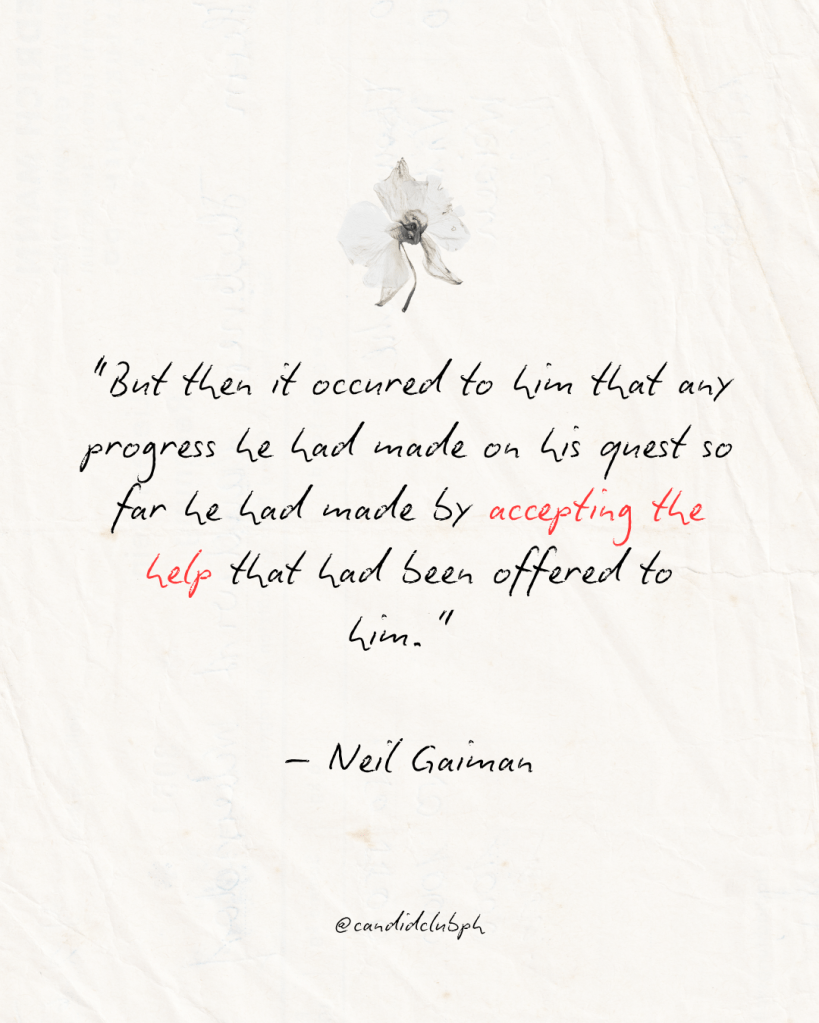
Maybe that means sharing one small truth. Maybe it’s letting your emotions show in your face instead of smoothing them over. Maybe it’s saying, “I can’t handle this alone,” even if you’re still figuring out what help you need.
The more you practice, the less heavy it feels.

Why it matters
Carrying everything yourself isn’t sustainable. Even the most capable people bend. And bending without breaking is a whole lot easier when someone else has a hand on the load.
Letting someone in gives you:
- Relief from the constant mental load.
- A chance to feel seen instead of just “managed.”
- Space for someone else’s perspective.
And maybe most importantly, it reminds you that you don’t have to do all of it, all the time.
How to make it less awkward
- Say one honest thing today — no need for a backstory
- Ask for something small — a text, a coffee, a ten-minute call.
- Watch how they respond — safe people make you feel lighter, not heavier.
- Keep some for yourself — boundaries and vulnerability can live together.
Sometimes, letting someone in won’t feel dramatic or life-changing. It might just be sitting across from a friend, sipping tea, and realizing your shoulders aren’t tight anymore. It might be a text later that says, “I’m glad you told me.”
That’s the part you hold onto.
And if you’re still working up to it — if the words feel stuck — you can start smaller. Our journal prompts from earlier this week were made for this exact thing. They’re the practice round before you pick up the phone. We’ll wait.




 Candid Club
Leave a comment